Who founded the Rangers of the United States Army?
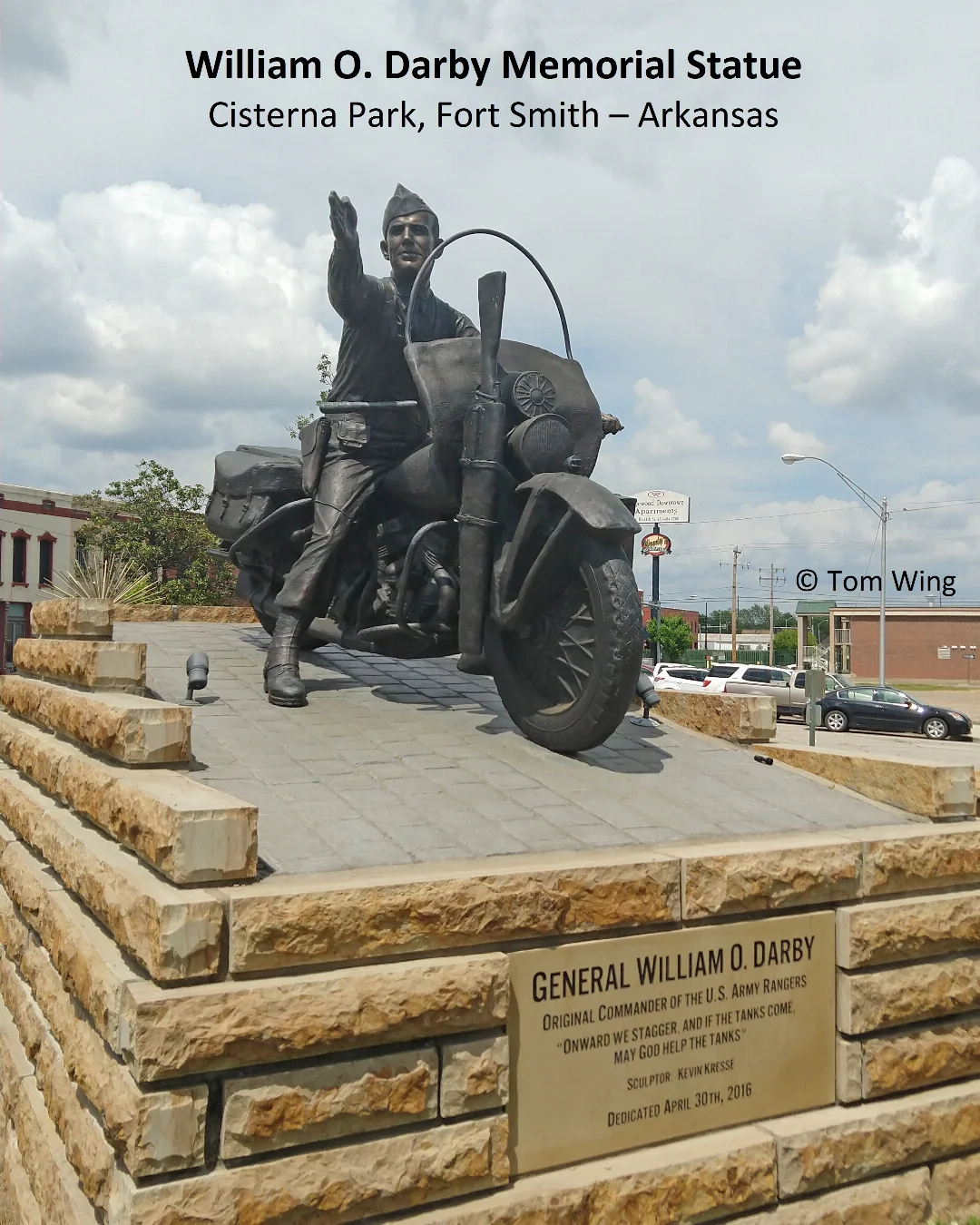
Brigadier General William Orlando Darby, born and raised in Fort Smith, Arkansas, founded the famed United States Army Rangers during World War II. Known for his frontline leadership, Darby organized and led America’s first Ranger Battalion, which became legendary for its daring operations from North Africa to Italy. A tragic chapter unfolded at Cisterna during the Anzio campaign, where of the 767 Rangers sent into battle, 761 were killed or captured in a single night on January 30, 1944. Today, his legacy endures not only in military tradition but also through a striking bronze statue in Fort Smith, unveiled on April 30, 2016—exactly 71 years after Darby’s death in Italy just two days before Germany’s surrender.
Upcoming Articles
11 articles
1925 Who was Canada's Artillery Commander in the Great War?
Major-General Sir Edward Morrison, Canada's Artillery Commander during the Great War, played a pivotal role in some of the Canadian Corps' greatest victories on the Western Front, including Vimy Ridge and Passchendaele. Despite his extraordinary leadership and the corps' unmatched record, Morrison remained largely forgotten for a century until historian Susan Raby-Dunne uncovered his remarkable story and connection to John McCrae, author of “In Flanders Fields.” In 2017, Morrison’s previously vanished grave marker at Ottawa’s Beechwood Cemetery was restored and formally rededicated, bringing overdue recognition to a commander whose strategic direction led to sixty percent of the war’s total casualties being inflicted by Canadian guns. As we mark the 100th anniversary of his death in 2025, Morrison’s legacy now stands as a testament to the courage, skill, and sacrifice of Canada’s artillery and the men he led.
2000 When was the Canadian Unknown Soldier entombed at the National War Memorial, Ottawa?
Canada’s Tomb of the Unknown Soldier, located at the foot of the National War Memorial in Ottawa, stands as a profound symbol of national remembrance. The unidentified soldier was repatriated from the Cabaret Rouge British War Cemetery near Vimy Ridge, a site deeply significant to Canada’s military heritage. Unveiled on May 28, 2000, the sarcophagus—designed by sculptor Mary-Ann Liu—was modeled after the altar of the Canadian National Vimy Memorial in France. This year, 2025, marks the 25th anniversary of this moving tribute to the sacrifices and unity of generations of Canadians.